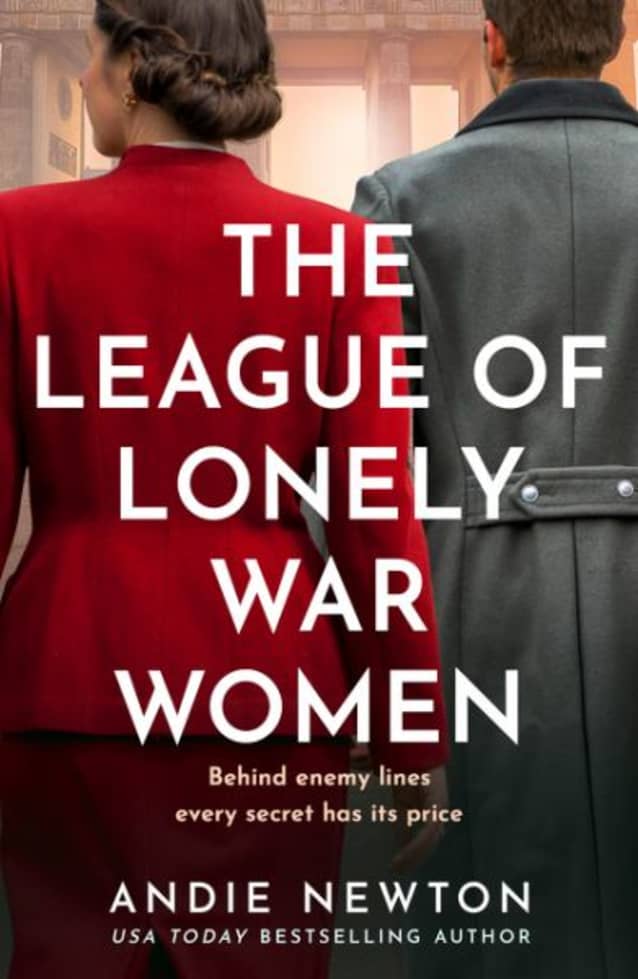
The League of Lonely War Women
About
‘A woman can get more information about German supply lines and replacements than a man with a knife to a soldier’s throat...’
Germany, 1944
Best friends Vivien Allen and Junie Knight are part of the covert world of America’s Morale Operations branch. As members of The League of Lonely War Women, a dark propaganda campaign aimed to sow seeds of doubt in German soldiers’ minds, their first mission sends them deep into enemy territory.
But their mission isn’t exactly what was sold to them, and the tracking of a dangerous SS officer goes very wrong, their friendship is irreparably broken.
Now, ten years later, Viv is still paying the consequences, so when a chance at redemption lands in her lap she seizes it, determined to right past wrongs, reconcile with Junie, and complete her mission once and for all...
'Captivating … couldn’t put it down' ⭐⭐⭐⭐⭐
'Fascinating and compelling … transporting me to the past.' ⭐⭐⭐⭐⭐
'I constantly needed to know what would happen next! … I finished the final pages with a smile on my face' ⭐⭐⭐⭐⭐
'It moved fast, pulled me in early, and kept me fully invested until the very last delicious page. Buckle up, because you will not want to stop reading.' ⭐⭐⭐⭐⭐
'Had me hooked, chilled me to the core … and had me rooting for her female protagonists' ⭐⭐⭐⭐⭐
'The main plot is a page turner in itself, but for me it's the portrayal of female friendship and loyalty that makes this book such a great read' ⭐⭐⭐⭐⭐
'Edge of the seat reading' ⭐⭐⭐⭐⭐
Read less
Praise for this book
The Second World War continues to furnish novelists with inexhaustible plots, its vast machinery of conflict creating space for both grand strategy and intimate ambition. This novel situates itself within this well-trodden terrain, focusing on a group of female analysts in London whose rivalry, patriotism and hunger for advancement propel them from desk work into the shadows of intelligence.
The story opens in September 1944 with a provocative discovery on the Western Front: a German propaganda flyer promising companionship to soldiers through a “League” of dutiful women. From there, the narrative shifts to Grosvenor Square, where WAC analysts Viv Allen and Junie Knight compete with OSS counterparts to identify enemy targets. Their successful recommendation—a tyre factory supplying aero equipment—earns them promotion and transfer to Rome. What begins as professional rivalry darkens into questions of loyalty, espionage and the moral compromises demanded of women operating behind enemy lines.
Newton writes with pace and commercial assurance. The opening London chapters are lively, buoyed by sharp dialogue and a brisk depiction of office politics. The camaraderie between Viv and Junie is engaging and emotionally credible, and the air-raid sequence is effectively staged. Research appears sound in its depiction of OSS structures, Women’s Army Corps restrictions, and the climate of flying-bomb attacks in late-war London. The competitive culture between intelligence units feels plausible, though occasionally heightened for dramatic effect. The tone sometimes tilts toward contemporary sensibility in its gender politics. Yet these do not seriously undermine the setting.
Within the crowded field of WWII fiction, Newton’s novel distinguishes itself by foregrounding female intelligence work and professional ambition rather than battlefield heroics. It is an accessible, well-structured story that balances romance, rivalry and wartime peril with considerable narrative energy.